STRICT LIABILITY AND CAUSATION IN NUCLEAR THIRD PARTY LIABILITY: THE BURDEN THE CONVENTIONS DID NOT LIFT
Abstract
The nuclear liability conventions relieve victims of the need to prove fault, but not of the need to prove causation. The operator is liable only “upon proof” that the damage was caused by a nuclear incident, and the conventions leave the standard and method of that proof to the law of the competent court. This paper argues that causation, not fault, is where the fate of many claims will be decided, particularly for stochastic health effects that appear years after exposure and cannot be told apart from ordinary disease. We explain why radiation science makes individual causation so hard to prove, examine how national law fills the gap (with a focus on Belgium and France, including the scheme for victims of nuclear tests), compare the techniques used elsewhere, consider when the causal link is broken, and propose measures that legislators should adopt before, rather than after, an accident.
Introduction
Nuclear third-party liability is usually introduced through its five pillars: strict liability, exclusive channelling to the operator, limitation in amount, limitation in time and a single competent court. Of these, strict liability is often presented as the principal victim-protective feature of the system. It is a real gain, since victims no longer have to show negligence in a complex, closely guarded technical activity. But it is only one third of what a claimant must establish. The claimant must also prove the damage and the causal link between the incident and that damage. While the 2004 Protocols harmonised the definition of nuclear damage, causation is left almost entirely untouched by the conventions.
This matters most for the type of damage that nuclear accidents are best known for: cancers and other illnesses that appear five, ten or thirty years after exposure to low or moderate doses of ionising radiation, and that look clinically identical to the same diseases occurring spontaneously. For these claims, the removal of fault offers little help. The claimant still has to convince a court that this disease in this person was caused by that incident. The question for policy-makers is therefore not whether nuclear liability is strict (it is) but whether the rules on causation allow strict liability to work as intended.
-
What strict liability achieved
From fault to created risk
The drafters of the Paris Convention consciously departed from fault-based liability. Their reasoning rested on the theory of created risk: a person who carries on a dangerous activity from which it benefits, and which it controls, must bear the harmful consequences of that activity even without wrongdoing [1, 2]. The Explanatory Statement (Exposé des Motifs) records that, in Western Europe, the exercise of a dangerous activity already tended to entail a presumption of liability, and that the particular risks of nuclear activities and the difficulty of proving fault, given the complexity of the technology, justified making the operator’s liability objective and independent of fault [1]. The evidential argument is strong: after a serious accident the installation may be destroyed or inaccessible, key data may be classified for security reasons, and the sequence of events may be beyond the understanding of any non-specialist claimant [2].
Strict liability under the conventions is also close to absolute. Under the revised Paris Convention, the operator is exonerated only where the incident is directly due to an act of armed conflict, hostilities, civil war or insurrection (Article 9) [3]. The former exoneration for grave natural disasters of an exceptional character was removed by the 2004 Protocol, on the basis that such risks must be taken into account in the design and operation of installations [3]; Belgium had already declined to use it in 1985 (Article 5) [4]. The operator may be relieved, wholly or partly, only where the victim’s gross negligence or intentional act contributed to the damage, if national law so provides (Article 6(e)); Belgian law excludes compensation where the victim intentionally caused the incident or the damage (Article 24) [4].
-
What strict liability does not do
Strict liability removes the requirement of a wrongful act. It does not remove the requirement of a causal link [9]. Article 3(a) of the revised Paris Convention makes the operator liable for nuclear damage “upon proof that such damage was caused by a nuclear incident in such installation or involving nuclear substances coming from such installation” [3]. Belgian law adopts the same structure (Article 5) [4]. The claimant therefore has to establish a chain of three links:
- that a nuclear incident occurred in, or involving nuclear substances coming from, the defendant operator’s installation (which identifies the liable operator);
- that the loss falls within the definition of nuclear damage, which, apart from preventive measures, requires that it arise out of or result from ionising radiation emitted by the relevant sources (Article 1(a)(vii)) [3]; and
- that there is a causal link between that incident and the specific loss suffered by the individual claimant.
On the standard and method of proof for these links, the conventions are silent. Under Article 14(b) of the revised Paris Convention, all matters, substantive and procedural, that the Convention does not specifically govern are referred to the national law of the competent court [3]; the Vienna regime takes the same approach [5]. The only causation rule of substance concerns mixed damage: where damage is caused jointly by a nuclear incident and a non-nuclear incident, the part caused by the latter is treated as nuclear damage to the extent that it cannot be separated from the nuclear damage (Article 3(b)) [3]; Belgian law reproduces this rule (Article 6) [4]. This rule helps only once a nuclear contribution has been established.
-
Why is causation the real battleground?
In principle, the causal link must be established with certainty in civil law systems, or on the balance of probabilities in common law systems, and this is a real problem for victims. Under certain conditions, however, a high degree of probability suffices. In French law, causation may be proven by any means, including presumptions of fact, and statute and case law recognise presumptions of causation which shift or, more often, lighten the burden of proof [26]. Such presumptions remain exceptional: the alleged cause must at least carry the risk of the damage and make it probable [22, 26]. The Belgian requirement of a “reasonable degree of certainty” (Article 8.5 of the Civil Code) points in the same direction [14]. Three situations must be distinguished.
Deterministic and stochastic effects
The removal of fault mainly benefits victims of immediate and visible damage [6]. High doses of ionising radiation produce deterministic effects (now termed tissue reactions by the ICRP), such as acute radiation syndrome or burns. These appear above a threshold dose, increase in severity with dose and occur shortly after exposure. Causation is rarely contested for them.
Stochastic effects are different in kind. For cancer and heritable effects, radiation increases the probability that the disease occurs, not its severity [7]. For radiological protection purposes, the ICRP assumes that this risk rises linearly with dose without a threshold, while itself warning that multiplying very small doses across large populations to predict numbers of cancers is not a reasonable use of collective dose [7]. Radiation-induced cancers carry no distinctive marker, appear after latency periods of years or decades, and occur against a high background rate of the same cancers from other causes (age, tobacco, diet, medical exposures, natural radiation). The longer the delay, the more difficult it becomes to show a causal link, whether for bodily injury appearing years later or for damage resulting from diffuse contamination [6]. As time passes, competing causes of the disease may emerge and the causal link weakens accordingly [27].
The statistical victim
Radiation epidemiology usually reasons in terms of the excess relative risk (ERR) associated with a given dose. For an exposed individual who develops the disease, the probability that radiation was the cause (the probability of causation) can be approximated as ERR/(1 + ERR). It only exceeds 50% where the dose at least doubles the baseline risk of the disease. At the doses received by most members of the public in most accident scenarios, it is far below 50%.
This produces what may be called the statistical victim problem. At population level, an accident may be expected to cause additional cancers; individually, perhaps no claimant can show that his or her cancer was more likely than not one of them. An all-or-nothing rule of causation then produces a paradox: the operator may be responsible for real harm in aggregate yet liable to nobody. UNSCEAR has concluded that no adverse health effects among Fukushima residents have been documented that are directly attributable to radiation exposure, and that future radiation-associated increases in cancer are unlikely to be discernible [8]; by contrast, the increase of thyroid cancer among those exposed as children after Chernobyl could be attributed to radiation. Science can resolve causation for some populations and diseases, but for most of them it cannot. The damage itself must also be certain: a person who has been exposed but has not (or not yet) developed a disease has suffered an increased risk, not a certain bodily injury, and the disease, if it materialises, may appear after the thirty-year period for personal injury claims has expired.
Beyond bodily injury
Causation problems are not limited to health effects. The revised definition of nuclear damage includes economic loss, loss of income from the use of the environment, the costs of reinstatement measures and the costs of preventive measures (Article 1(a)(vii) to (x)) [3]. For these heads of damage the question becomes one of remoteness and reasonableness: is a drop in the price of agricultural products caused by stigma rather than contamination, or a spontaneous evacuation outside official zones, sufficiently connected to the incident? The Convention only partly guides this assessment (Article 1(a)(x)) [3]; national law decides where causation ends.
-
How national law fills the gap
The limits of general causation theories
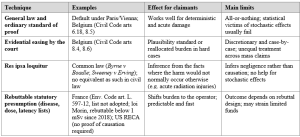
Where no specific rule exists, courts apply their general law of causation. In continental systems, the two classic theories are the equivalence of conditions, under which any event without which the damage would not have occurred is a cause (the equivalent of the common law “but for” test [24]), and adequate causation, under which only a fact that, in the ordinary course of things, is apt to produce damage of the type suffered is a cause. Neither is designed for uncertainty. Equivalence says nothing about how to establish the sine qua non condition where science can only offer probabilities; adequacy does not tie compensation to the realisation of the specific risk that justifies strict liability [9]. French case law has nevertheless turned adequacy to the victim’s advantage: where a fault has created an objectively dangerous situation, courts tend to treat the damage as the normal realisation of that risk, using adequate causation as a rule of evidence [26]. In the United States, the Price-Anderson Act leaves causation to the law of the State where the incident occurs [10].
Belgium: a strict liability statute resting on general law
The Belgian Law of 22 July 1985 implements the Paris and Brussels Conventions. It was substantially amended by the Law of 29 June 2014, in force since 1 January 2016, and further aligned in 2021 with the revised Paris Convention, in force since 1 January 2022 [4, 11]. The regime is protective in several respects: the operator’s liability is capped at EUR 1.2 billion per incident (Article 7), the State compensates damage not covered by insurance up to that cap (Article 22), and victims have a direct action against the insurer or guarantor (Article 27) [4, 12]. Claims for personal injury may be brought within thirty years of the incident, and other claims within ten years, subject to a three-year period running from knowledge of the damage and of the liable operator (Article 23) [4].
The Belgian statute, however, contains no rule on causation beyond the mixed damage rule, and refers compensation to general law (Article 20) [4]. Causation is therefore governed by general tort law, recodified in Book 6 of the Civil Code (Law of 7 February 2024), in force for facts occurring from 1 January 2025 [13]. Three of its provisions deserve attention.
First, Article 6.18 codifies the condicio sine qua non test, subject to the exclusion of links so remote that imputing the damage would be manifestly unreasonable [13]. This confirms the all-or-nothing approach that creates the statistical victim problem.
Second, Article 6.22 introduces proportional liability for uncertainty as to causation: where it is uncertain whether a fault was a necessary condition of the damage, the injured party is entitled to partial compensation in proportion to the probability that the fault caused it [13]. This is precisely the kind of tool that stochastic damage calls for. Yet, on a literal reading, it is confined to fault, and the nuclear operator is liable without fault.
Third, Article 6.23 makes each of several persons whose similar facts exposed the victim to the risk liable in proportion to the probability that its fact caused the damage [13]. In the nuclear context, channelling leaves only one liable person, and the competing cause is typically background risk (spontaneous disease, tobacco, natural or medical radiation), not another responsible person.
The law of evidence in Book 8 of the Civil Code offers more flexible tools. Proof must in principle be provided with a reasonable degree of certainty (Article 8.5), but plausibility may suffice for facts which, by their very nature, cannot reasonably be proven with certainty (Article 8.6), and in exceptional circumstances the court may reallocate the burden of proof (Article 8.4) [14]. Late-occurring radiation-induced disease is a strong candidate for these provisions. But they are discretionary and case-by-case: after a major accident, similar victims might be treated differently.
France: an unimplemented presumption and the lessons of the nuclear tests
French law chose a different route on paper. Article L. 597-12 of the Environmental Code, taken over from Article 10 of the Law of 30 October 1968, provides that a non-exhaustive list of conditions which, unless proven otherwise, are presumed to result from the accident shall be established by regulation, according to the irradiation and contamination received and the time within which the condition was observed [15, 26]. The law thus provides for a rebuttable presumption based on dose, disease and latency. To our knowledge, however, the implementing list has never been adopted. The presumption exists in law but cannot yet be applied, and would have to be improvised after an accident.
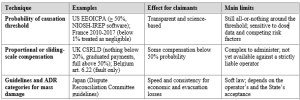
The French regime for victims of nuclear weapons tests (Law No. 2010-2 of 5 January 2010, known as the loi Morin), which lies outside the Paris Convention, shows how much depends on the design of rebuttal [22, 23]. A claimant who shows presence in a listed area during a listed period and one of the listed radiation-induced cancers benefits from a statutory presumption of causation. Originally, the presumption could be rebutted where the risk attributable to the tests was “negligible”: the compensation committee (CIVEN) assessed that risk with the US NIOSH-IREP probability of causation software and treated a probability below 1% as negligible [22]; between 2010 and 2017, only 3% of claims (31 out of 1,216) succeeded [16]. The negligible-risk exception was removed in 2017 and replaced in 2018-2019 by a rebuttal where the dose received was below 1 mSv per year; between 2018 and 2024 the success rate rose to 44.2% (945 out of 2,138) [16]. A bill adopted by the National Assembly on 29 January 2026 and, in amended form, by the Senate on 28 May 2026 would replace the dose threshold with an irrebuttable presumption; at the time of writing, it was still before Parliament [16].
The Conseil d’État has shaped the conditions of its rebuttal. In 2015, it accepted the probabilistic method but held that it could not be relied upon where the dosimetric data were insufficient. After the 2017 reform, it held that the presumption could be rebutted only if the administration established that the disease resulted exclusively from a cause other than exposure to radiation from the tests, which made the presumption almost irrebuttable in practice [22, 23, 29]. The 1 mSv threshold subsequently adopted is a radiation protection limit, not a dose from which a causal link has been scientifically established: as Lamoureux shows, the method of proof reflects a policy choice on how widely to compensate rather than scientific causation [23]. The lesson is clear: the drafting of the rebuttal clause determines the outcome of claims as much as the presumption itself.
-
Other techniques for managing causal uncertainty
Other jurisdictions use a range of techniques, usually in compensation schemes outside civil liability [22]. In the United States, the Radiation Exposure Compensation Act does not require proof of causation: claimants must show a listed disease after working or living in a designated area for a specified period, and receive a lump sum [18, 22]. The Energy Employees Occupational Illness Compensation Program Act compensates Department of Energy workers where the probability of causation, calculated with the NIOSH-IREP software, reaches at least 50%, while members of a Special Exposure Cohort benefit from a presumption [17, 22]. In the United Kingdom, the Compensation Scheme for Radiation-Linked Diseases pays nothing below a 20% probability of causation, partial compensation in intermediate bands (for instance 75% of full compensation between 40% and 50%) and full compensation above 50% [19, 22]. In Japan, after Fukushima, a Dispute Reconciliation Committee issued guidelines defining categories of damage presumed to be caused by the accident, such as losses linked to evacuation orders, which an alternative dispute resolution centre applied to mass claims [20, 30].
Common law systems also know the doctrine of res ipsa loquitur (“the thing speaks for itself”), under which a court may infer negligence from an accident that would not ordinarily happen without it, such as a barrel of flour falling from a warehouse window; the inference is permissive and does not shift the burden of proof [25]. Civil law systems do not know the doctrine as such [9], although presumptions of fact may lead to comparable results [26]. Its relevance to nuclear claims is limited: it infers negligence, which strict liability has made irrelevant, rather than causation. At most, the same logic may support causation where only radiation can explain the harm, as with acute radiation injuries; it offers no help for stochastic effects.
Table 1. Techniques for managing causal uncertainty in radiation damage claims
-
Breaking the causal link
Force majeure and the victim’s conduct
Although grave natural disasters are no longer a ground of exoneration, an external event may still break the causal link. Where the damage results exclusively from the natural event itself, such as a tsunami, and not from the nuclear incident, it is simply not nuclear damage and the operator is not liable. Where both contributed and their effects cannot reasonably be separated, however, the mixed damage rule treats the whole damage as nuclear damage (Article 3(b)) [3, 4]. The victim’s gross negligence or intentional act may likewise break the causal chain, wholly or partly (Article 6(e)) [3].
Pre-existing conditions
A related question is whether a pre-existing illness or predisposition of the victim may reduce compensation. The guiding principle is full compensation: where the incident triggers, aggravates or reveals a previously asymptomatic condition, the liable person must compensate the whole of the resulting damage. Compensation may be adjusted only where the pre-existing condition was already causing disabling effects or measurable symptoms before the incident.
For stochastic effects, this principle collides with probabilistic methods, which reduce the share attributed to radiation where other risk factors, such as smoking, are present. Under the French scheme, many lung cancer claims failed for that reason, although a cancer may have several causes and radiation may increase the risk associated with tobacco [22]. Treating a competing risk factor as a reason to deny compensation altogether sits uneasily with the rule that the victim’s predisposition does not reduce the liable person’s obligation.
-
Interaction with the other pillars of the regime
Limited funds and late claims
Causation rules cannot be designed in isolation from the limitation in amount. A generous presumption increases the number of successful claims against a fixed fund; a strict rule preserves the fund but may leave genuine victims uncompensated. Claims for stochastic effects arrive years after property and economic claims have been paid, and the thirty-year period for personal injury claims (Article 8(a)) [3] is of little value if the fund has been exhausted. Time also erodes causation itself, as competing causes emerge, and the operator liable at the time may no longer exist, a difficulty already experienced in France with defunct mining operators [27]. Unlike the revised Vienna Convention, which gives priority to personal injury claims (Article VIII(2)) [5], the Paris Convention leaves any ranking to national law; in Belgium, the King determines the criteria for equitable distribution (Article 20) [4].
Channelling and suppliers
Channelling simplifies the causal enquiry for victims: they need not identify which contractor, supplier or designer was at the origin of the incident. Causation between a supplier’s conduct and the incident becomes relevant again only where the operator has a right of recourse, against an individual who acted with intent to cause damage or under an express contractual clause (Article 6(f)) [3]. Such clauses should therefore address the standard of proof, expert evidence and contributing causes, on which the Convention is silent. Economic analysis questions the efficiency of legal channelling, since it removes liability, and thus incentives for prevention, from other parties who influence the risk, such as suppliers of defective equipment [21, 28]. Faure illustrates this with Fukushima: if the vulnerability of the emergency generators resulted from the reactor design rather than the operator’s negligence, channelling excluded any liability of the designer, while capped liability and limited recourse may leave victims without full compensation. Where liability is strict and several parties contribute to a risk, a proportional liability rule would be economically preferable [28].
-
One court, one causation law
Because jurisdiction lies in principle with the courts of the Contracting Party in whose territory the incident occurred (Article 13) and Article 14(b) refers to the law of that court, all victims of a given incident, wherever they reside, have their causation questions decided under the same law. This is a real strength in transboundary accidents, but it also exports the causation law of the installation State: victims of a Belgian incident living in the Netherlands, Luxembourg, France or Germany would have their claims assessed under Belgian rules [11]. Conversely, victims of different accidents in different Paris Convention States may face very different evidential burdens: the harmonisation of damage heads achieved in 2004 has not been matched by any harmonisation of causation.
-
Recommendations
Causation rules must be settled before an accident: afterwards, every choice becomes a redistribution between identified victims, operators, insurers and public funds. We suggest the following measures.
- Consider proportional compensation for stochastic effects. Compensation proportionate to the probability of causation, within a defined band, reflects the science more honestly than the all-or-nothing rule and protects the fund. In Belgium, the logic of Article 6.22 of the Civil Code could be extended to the operator’s strict liability.
- Organise the evidence in advance. Emergency preparedness should include rapid dose reconstruction, registries of exposed persons and long-term health monitoring, with an obligation to preserve and share data.
- Issue claims-handling guidelines for mass damage. Published categories of presumptively compensable economic and evacuation-related damage (on the Japanese model) would speed up compensation and reduce litigation.
- Coordinate causation with the fund. Presumptions for latent disease should come with priority for personal injury claims and a reserve for late claims.
- Pursue international guidance. The NEA Nuclear Law Committee could develop non-binding guidance on causation, comparable to the Explanatory Statement. More ambitiously, uniform causation rules could be interpreted by a common court, on the model of the Court of Justice of the European Union.
Conclusion
Strict liability was designed to protect victims from the complexity of nuclear technology. The conventions removed fault from the equation, but left causation to national law, which was not designed for damage that is probabilistic, delayed and indistinguishable from ordinary disease. Belgium’s recent recodification illustrates the point: it introduces proportional liability, but for fault only, and flexible evidential tools, but only case by case. France shows both that a presumption has no effect until it is implemented and, through the nuclear tests, that the drafting of its rebuttal decides the fate of claims. Strict liability will only fully protect victims if causation rules are defined in advance, using the best available science and consistently with the limited funds available.
References
[1] OECD Nuclear Energy Agency, Exposé des Motifs of the Paris Convention (as amended by the Protocols of 1964, 1982 and 2004), NEA/NLC/DOC(2020)1, 19 February 2020, in particular para. 23.
[2] J.-P. Piérard, Responsabilité civile, énergie atomique et droit comparé, Brussels, Bruylant, 1963, pp. 86 and 107.
[3] Convention on Third Party Liability in the Field of Nuclear Energy of 29 July 1960, as amended by the Protocols of 1964, 1982 and 2004 (the latter in force since 1 January 2022).
[4] Belgian Law of 22 July 1985 on third party liability in the field of nuclear energy (loi sur la responsabilité civile dans le domaine de l’énergie nucléaire), as amended, in particular by the Law of 29 June 2014 (in force 1 January 2016), Articles 5, 6, 7, 8, 18, 20, 22, 23, 24 and 27.
[5] Vienna Convention on Civil Liability for Nuclear Damage of 21 May 1963, as amended by the Protocol of 12 September 1997, in particular Article VIII(2).
[6] P. Stahlberg, « Causalité et problème de la preuve en matière de dommages nucléaires », Bulletin de droit nucléaire, No. 53, 1993, pp. 22-30.
[7] International Commission on Radiological Protection, The 2007 Recommendations of the International Commission on Radiological Protection, ICRP Publication 103, Annals of the ICRP, vol. 37 (2-4), 2007.
[8] UNSCEAR, Sources, Effects and Risks of Ionizing Radiation, UNSCEAR 2020/2021 Report to the General Assembly, Annex B: Levels and effects of radiation exposure due to the accident at the Fukushima Daiichi Nuclear Power Station, United Nations, 2022.
[9] G. Schamps, La mise en danger : un concept fondateur d’un principe général de responsabilité. Analyse de droit comparé, Brussels/Paris, Bruylant/LGDJ, 1998, in particular pp. 89, 101 and 935-946.
[10] United States, Atomic Energy Act of 1954 as amended by the Price-Anderson Act, 42 U.S.C. § 2014(hh) (public liability action) and § 2210.
[11] Belgian Federal Government, press release “Responsabilité civile dans le domaine de l’énergie nucléaire”, 9 July 2021 (news.belgium.be); RTBF, “La Chambre valide l’extension de la responsabilité civile dans le domaine du nucléaire”, 21 October 2021.
[12] J. Caeymaex and T. Cavenaile, « La victime d’un accident nucléaire », in Manuel des sûretés mobilières, 6th ed., Brussels, Larcier-Intersentia, 2024, pp. 471-473.
[13] Belgian Civil Code, Book 6 “Extra-contractual liability”, introduced by the Law of 7 February 2024 (Moniteur belge, 1 July 2024), in particular Articles 6.18, 6.22 and 6.23, and Article 44 of the Law (transitional provision).
[14] Belgian Civil Code, Book 8 “Evidence”, introduced by the Law of 13 April 2019, in particular Articles 8.4, 8.5 and 8.6.
[15] French Environmental Code, Article L. 597-12, as drafted by Ordinance No. 2012-6 of 5 January 2012 (formerly Article 10 of Law No. 68-943 of 30 October 1968 on third party liability in the field of nuclear energy).
[16] French Law No. 2010-2 of 5 January 2010, as amended; French Senate, Report No. 640 (2025-2026), 20 May 2026, and legislative file ppl25-324.
[17] United States, Energy Employees Occupational Illness Compensation Program Act of 2000, 42 U.S.C. § 7384 et seq.; 42 C.F.R. Part 81 (guidelines for determining the probability of causation).
[18] United States, Radiation Exposure Compensation Act, Pub. L. 101-426 (1990), as amended, 42 U.S.C. § 2210 note.
[19] United Kingdom, Compensation Scheme for Radiation-Linked Diseases (scheme rules agreed between participating nuclear employers and trade unions).
[20] Japan, Act on Compensation for Nuclear Damage (Act No. 147 of 1961), as amended; Dispute Reconciliation Committee for Nuclear Damage Compensation, Interim Guidelines, 5 August 2011, and supplements.
[21] M. Faure and T. Vanden Borre, “Compensating Nuclear Damage: A Comparative Economic Analysis of the U.S. and the International Liability Schemes”, William & Mary Environmental Law and Policy Review, vol. 33, 2008.
[22] M. Lahana, L’indemnisation des victimes des essais nucléaires français, doctoral thesis, Université Paris II Panthéon-Assas, 2020, in particular pp. 66-68, 110-127 and 148-160.
[23] M. Lamoureux, « Preuve et expertise en matière nucléaire : de quelques enseignements tirés du régime d’indemnisation des victimes des essais nucléaires », Revue juridique de l’environnement, 2022/3, vol. 47, pp. 479-490.
[24] Barnett v Chelsea and Kensington Hospital Management Committee [1969] 1 QB 428.
[25] Byrne v Boadle (1863) 2 H & C 722; Sweeney v Erving, 228 U.S. 233 (1913).
[26] P. Jourdain, « Droit à réparation. – Lien de causalité. – Détermination des causes du dommage », JurisClasseur Civil Code, Art. 1240 à 1245-17, Fasc. 160, updated 31 December 2022, in particular nos. 64-106.
[27] C. Portier, « L’ignorance saisie par le droit de la responsabilité civile », Cahiers Droit, Sciences & Technologies, No. 19, 2025 (online 10 May 2025), http://journals.openedition.org/cdst/11164.
[28] M. Faure, « L’attribution de la responsabilité : analyse économique de différents cas », in S. Ferey and F. G’sell (eds), Causalité, responsabilité et contribution à la dette, Brussels, Bruylant, 2017, pp. 267-290, in particular pp. 282-288.
[29] French Conseil d’État, 7 December 2015, No. 378325; Conseil d’État (opinion), 28 June 2017, No. 409777; Law No. 2018-1317 of 28 December 2018, Article 232; Conseil d’État, 6 November 2020, No. 439003; Conseil constitutionnel, 10 December 2021, No. 2021-955 QPC; Conseil d’État, 23 February 2022, No. 449353 and others.
[30] OECD Nuclear Energy Agency, Japan’s Compensation System for Nuclear Damage: As Related to the TEPCO Fukushima Daiichi Nuclear Accident, Paris, OECD, 2012.